Cable Watch

The Cable Watch module covers an asset from route planning to incident response. Before construction, it quantifies vessel risk along a proposed route. In operation, it scores vessel behavior inside the protection zone and escalates alerts as the evidence builds. When your own sensing registers a disturbance, it names the vessels that were over that point and what they were doing.

Vessel risk intelligence for subsea cables and offshore assets

Built for
Cable owners and consortiaOffshore wind developers and operatorsUtilities and grid operatorsCable route planners and engineering firmsMarine insurers and underwriters
NeroCable WatchHow an alert buildsSimulated replaySimulated
23:38 TaiwanSpeed 0.0 kn
  1. 22:32Slow inside the protection zone for over an hour+20
  2. 23:32At anchor in a no-anchoring zone for 2 hours+20
Score · Watch at 20, Warning at 4040
WarningAlert raised · A-21 · 23:32
Simulated replay: the demo ship slows inside the cable's protection zone, anchors and stays. Each indicator adds its points until the score reaches the Warning threshold. Ships and tracks come from Nero's synthetic track generator; the cable is illustrative.

Across the asset lifecycle

Each capability runs on the same evidence and identity layers.

Assess: Route & Site Risk Study
Historical traffic, anchoring and fishing along a proposed route or site, graded segment by segment, continuing as a recurring corridor report once the asset is in service. Each study runs on historical data licensed for that area and period.
Monitor: protection-zone alerts
Indicator-based alerting inside the protection zone, escalating from Watch to Warning to Critical and delivered into the tools your operations center already uses.
Alert queue: acknowledge and close
Every alert stays in a queue until someone on watch acknowledges it; acknowledgements, closures and their reasons go into an operator log. Acknowledging an alert never changes its level.
Attribute: disturbance attribution
When fiber sensing or a cable alarm registers a disturbance, Nero lists the vessels over that point, their identity history and their behavior before and after, with an evidence file.
Investigate: incident reconstruction
Any alert or disturbance can go straight into a Investigations reconstruction.
Context: official cable-fault notices
Officially published cable-fault information is recorded daily as context, and each snapshot is sealed with a hash, so a reconstruction can show what was publicly known at the time.
Anatomy of an alert

Every alert shows its working

An alert is a vessel, a zone, the indicators that fired, the points each one added and the evidence behind them. There is no black box in it, and no point in it comes from a flag.

  1. A
    One alert per vessel and zone

    It stays in the queue until someone on watch acknowledges it.

  2. B
    The vessel on the chart

    Classified as a vessel, not fishing gear, before anything is scored.

  3. C
    Indicators, each with a reason

    Plain-language reasons and the points each one adds.

  4. D
    Flag and nationality

    Shown for context, never scored.

  5. E
    Fixed thresholds

    Watch 20, Warning 40, Critical 70, published in advance.

  6. F
    Acknowledge or close

    Logged with the time; the level never changes.

Escalation

An alert climbs as the evidence builds

Points rise only as the behavior continues. Routine fishing stays capped at Watch however long it lasts; a ship at anchor in a no-anchoring zone keeps climbing.

Demo vessel EAt anchor over the cable
Watch 20Warning 40Critical 70
12345
21:0022:0023:0000:00
  1. 121:10Slowed below 3 kn over the cable
  2. 221:22Anchored inside the protection zone
  3. 322:22+20 · Slow inside the zone for over an hour: Watch
  4. 423:22+20 · At anchor in a no-anchoring zone for 2 hours: Warning
  5. 523:39Acknowledged on watch; the level stays
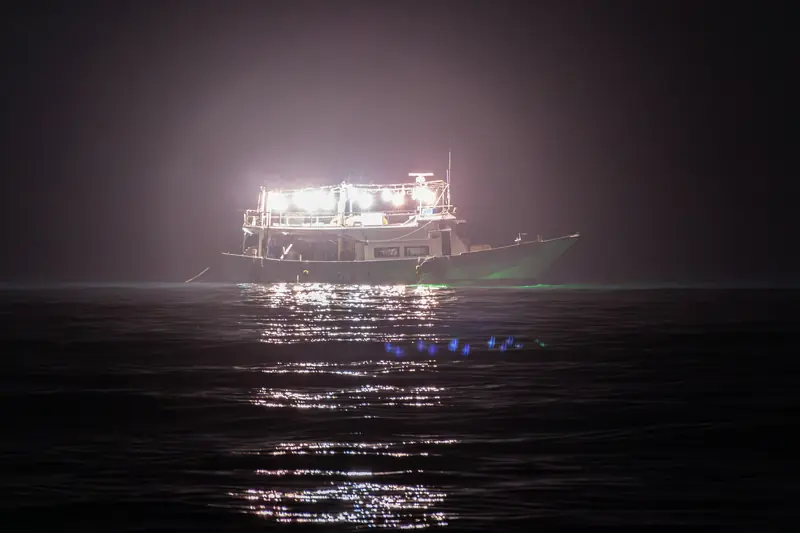
A fishing boat with its lamps lit at sea at night
Demo vessel FFishing pattern near the cable
Watch 20Warning 40Critical 70
Before the cap: 30
21:0022:0023:0000:00

Routine fishing is scored on its own and capped at Watch however long it lasts. It climbs further only if trawling speeds appear in a no-trawl zone.

Simulated · demo vessels and an illustrative cable

Below the surface

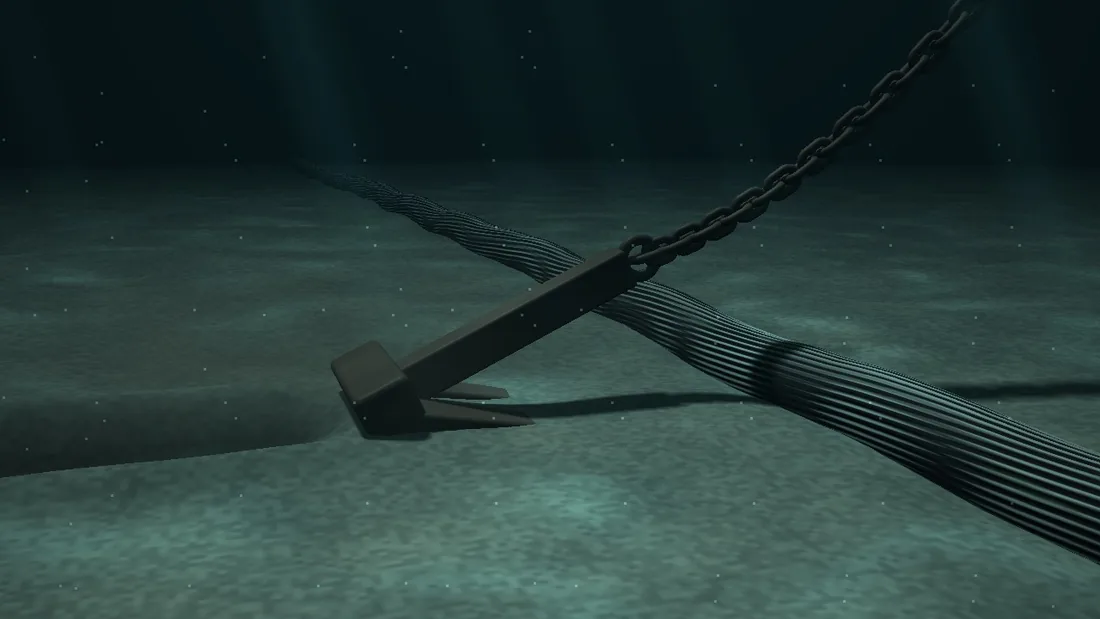
When an anchor drags, it ploughs a furrow across the seabed towards the cable. Nero reads it from the behavior at the surface: a ship reporting at anchor, but moving. The alert is raised before the anchor reaches the cable.

Illustration: an anchor drags across the seabed towards an armoured cable; Nero raises a Warning before contact. Illustration · not to scale
Illustration: a 3D scene built from code (no photographs, no AI imagery), with time compressed. Ships, alert and distances are simulated.

From the first survey to the last incident

Know the risk before the cable goes in

A route or site study grades each segment on licensed historical traffic, anchoring and fishing, against rules fixed before the analysis begins. Once the asset is in service, the same study continues as a recurring corridor report.
NeroRoute RiskRoute studyDemo routeSimulated
Route study · illustrative cable5
SegmentCrossingsRisk tier
S11Lower
S21Lower
S31Lower
S415Higher
S521Higher

Blue cells: a month of simulated traffic; the darker the cell, the more voyages through it

Graded on how often simulated traffic crosses each segment's protection band; a real study uses licensed historical data for the area and period.

  • Segment-by-segment grades with reasons
  • Historical data licensed for each study
  • Bilingual report and evidence file

Watch every vessel that crosses the corridor

Cable Watch classifies each contact, follows its behavior inside the protection zone and raises one alert that escalates as the evidence builds. A ship in steady transit stays at Monitoring; one that anchors or drags does not.

NeroCable WatchAlertsSegment 418:14:07Z
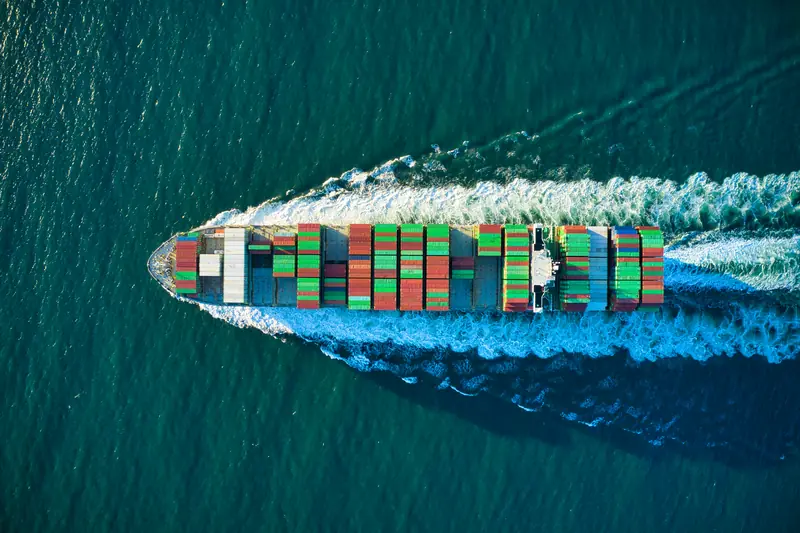
A container ship under way, seen from directly above
Demo vessel C · SIM-C
Crossing time
6 min
Speed
11.8 kn · steady
Score
0 · Monitoring
  • Watch, Warning and Critical, each with its reasons
  • An alert queue: acknowledge, close and an operator log
  • Routine fishing capped at Watch
  • Email and webhook at launch

Name the vessel behind a disturbance

When your fiber sensing or cable alarm registers an event, Nero lists every vessel within range at that moment, with its behavior before and after and its identity history. AIS alone cannot see an anchor dragged at speed. Your sensing can, and Nero shows which vessels were there.

NeroCable WatchAttributionDisturbance D-07Simulated23:38 Taiwan
Vessels within 2 NM of D-074

Disturbance D-07 · illustrative cable · 23:38 Taiwan
Source: your fibre sensing

  1. Demo vessel E0.29 NMAt anchor in the protection zone · score 40
  2. Demo vessel J1.2 NMTransit at 13.7 kn · score 0
  3. Demo vessel C1.3 NMTransit at 8.3 kn · score 0
  4. Demo vessel K1.8 NMAt anchor in zone C · outside the cable zone

Ranked by distance and behavior; only the behavior score raises an alert.

  • Uses your event time and position along the cable
  • Your sensing data serves only your organization
  • An evidence file for every disturbance

Turn an alert into a reconstruction

Any alert or disturbance can become a bilingual reconstruction, built from the same sealed data, for insurers, investigators and the courts.

NeroInvestigationsReconstructionA-21Simulated
Incident reconstruction · Demo vessel E · illustrative cable
Taiwan timeUTCEventEvidence
21:2213:22Enters the illustrative cable's protection zone at 7.4 knE-01
21:3213:32Slows inside the zone and anchors in the no-anchoring zoneE-02
22:3214:32Slow in the zone for an hour: Watch A-21 raised · +20E-03
23:3215:32Still at anchor after 2 hours: A-21 escalated to Warning · +20E-04
23:3815:38The operator acknowledges the alert; the ship is still at anchorE-05
Each evidence item resolves to sealed raw files and their hashesmanifest 4e7a…d20c
  • Taiwan time and UTC side by side
  • Every statement cites its evidence

How Cable Watch alerts

ContactsClassify

Fishing gear, navigation aids and other devices are classified first and excluded from vessel scoring.

IndicatorsScore

Indicators such as dwelling, confined movement while under way and slow crossings each add points, with a reason.

LevelsEscalate

The total sets the level; routine fishing is capped at Watch unless trawling speeds appear in a no-trawl zone.

DeliveryDeliver

Email and webhook (JSON) at launch, with other channels added as required.

Known limits

What AIS can and cannot establish

Approach & Limits
  • AIS reports where a vessel says it is, not where its anchor is. We therefore describe behavior as “consistent with” a pattern and never infer intent.
  • Vessels that do not transmit AIS are invisible to AIS-based alerting, and historical AIS covers only vessels that were transmitting.
  • An anchor dragged while a vessel is under way is often impossible to detect in time from AIS alone. That is why attribution pairs with your own sensing.
  • Alerting and studies are only as complete as the data behind them, and every report states the areas we cannot see.

Works with Investigations

Any alert or disturbance can go straight into a reconstruction, with the evidence already sealed.

Explore Investigations

NeroInvestigationsTrack replayDemo eventSimulated
21:22
23:38

Common questions

Do you score vessels by flag or nationality?
No. Flag and nationality carry no weight. If a vessel's MMSI contradicts its declared flag, we treat that as an identity question, nothing more.
How do you control false alarms?
We separate vessels from fishing gear and score fishing on its own. Rules are tuned on development data only, then tested on held-out data that was never used for tuning. Performance figures will be published only after independent testing. See How we decide.
What does attribution need?
Your disturbance events, a time and a position along the cable, from fiber sensing or a cable alarm system. That data serves only your organization unless your contract says otherwise.
How is segment risk calculated?
We divide the route into segments, measure crossings and slow, dwelling and anchoring behavior in each, then grade them against fixed rules set in advance. Every grade states its reasons.
Is it available now?
Not yet in general release. We are seeking a corridor and an operator for the first pilot deployment.
Become a pilot partner

We are seeking a small number of cable and offshore wind operators as partners for the first pilot deployments. Inquiries in English or Chinese.